
The Market of Helplessness: Inside the Brutal Reality of India’s Red-Light Districts
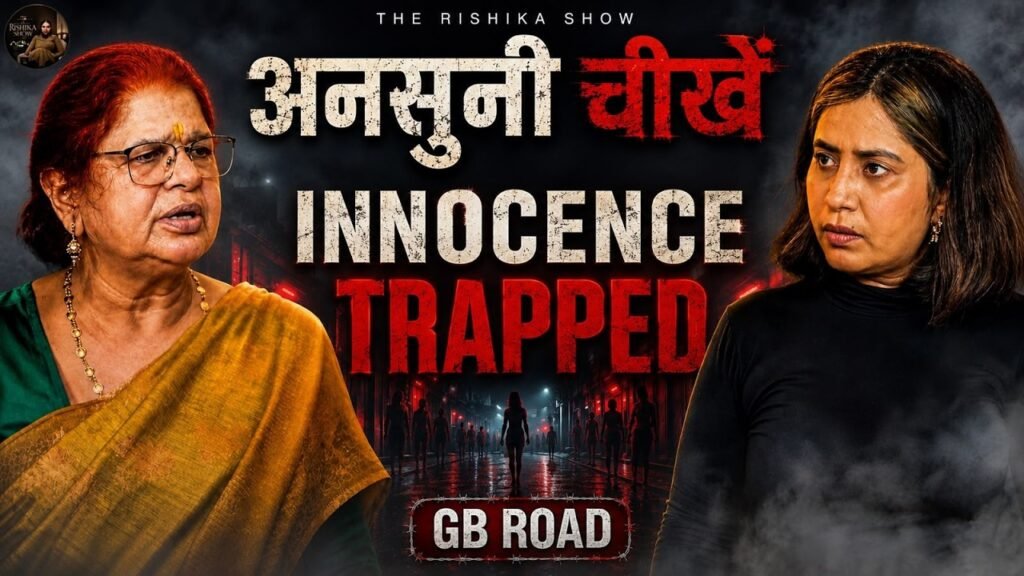
Breaking the Cycle: Atul Sharma on Trafficking and Rehabilitation:
For decades, social worker Atul Sharma has worked on the front lines of India’s fight against human trafficking, witnessing the exploitation hidden behind the walls of red-light areas. In her conversation on The Rishika Show, she speaks about how vulnerable girls are lured, trapped and abused, the failures that allow trafficking networks to survive, and why rescue alone is not enough. Her message is ultimately about dignity, rehabilitation, education and the need for society to recognize the warning signs before another life is lost.
Trapped, Not Chosen: The Brutal Reality Behind India’s Red-Light Districts:
Walk through the narrow lanes of Kamathipura or Meerut’s Kabari Bazaar, and it may appear, from the outside, like an established marketplace. But behind those walls lies a far darker reality. For social worker Atul Sharma, who has spent 34 years working to rescue women from such environments, these places represent not choice, but helplessness.
She challenges the uncomfortable belief that women simply choose to enter prostitution. According to her experiences, many victims are pulled into the system through trafficking, deception and vulnerability. Teenage girls, often just 15 or 16, can be targeted by men who present themselves as caring partners, promise marriage or a better future, and eventually sell them into brothels.
One case that stayed with Sharma involved a 16-year-old girl in Sonagachi who secretly reached out for help through WhatsApp. Her message eventually helped trigger a coordinated rescue operation at Howrah Station. But while some victims find a way to signal for help, countless others remain trapped with little access to money, communication or support.
Sharma’s depiction of life within these institutions is especially unsettling. Women may be deprived of their wages and given only the minimal necessities required to maintain their labor. Those who oppose may encounter extreme physical brutality and degradation. Even sickness does not always provide a way out; at-risk women may face neglect when they fall too ill to hold a job.
The problem, she argues, goes beyond traffickers. Sharma speaks openly about cases where police personnel allegedly protected pimps or interfered with rescue efforts. Such experiences reveal how difficult it becomes to protect victims when the very systems meant to help them fail.
She dismisses the outdated notion that red-light districts somehow safeguard society from sexual violence. The presence of these districts has never eradicated rape or sexual assault. As long as there is a need, exploitation can persist, fuelled by individuals who opt to ignore the consequences of that demand.
For Sharma, a raid cannot be viewed as the conclusion of a rescue. Survivors require education, job opportunities, financial autonomy, secure living conditions, and ongoing emotional assistance. She highlights rehabilitation initiatives where the offspring of sex workers receive education and are safeguarded from entering the same cycle. Several have advanced to become MCA graduates and bank officers, evidence that opportunity can transform an inherited destiny.
Her message extends beyond NGOs and authorities. Ordinary people, too, can play a role by recognizing signs of distress. Learning the Global Signal for Help and knowing emergency numbers such as 1098, 1090, 181 and 112 can make a crucial difference.
The real challenge, Sharma suggests, is not merely rescuing people from these streets. It is creating a society where vulnerable women and children have enough safety, opportunity and support that they never become trapped there in the first place.